
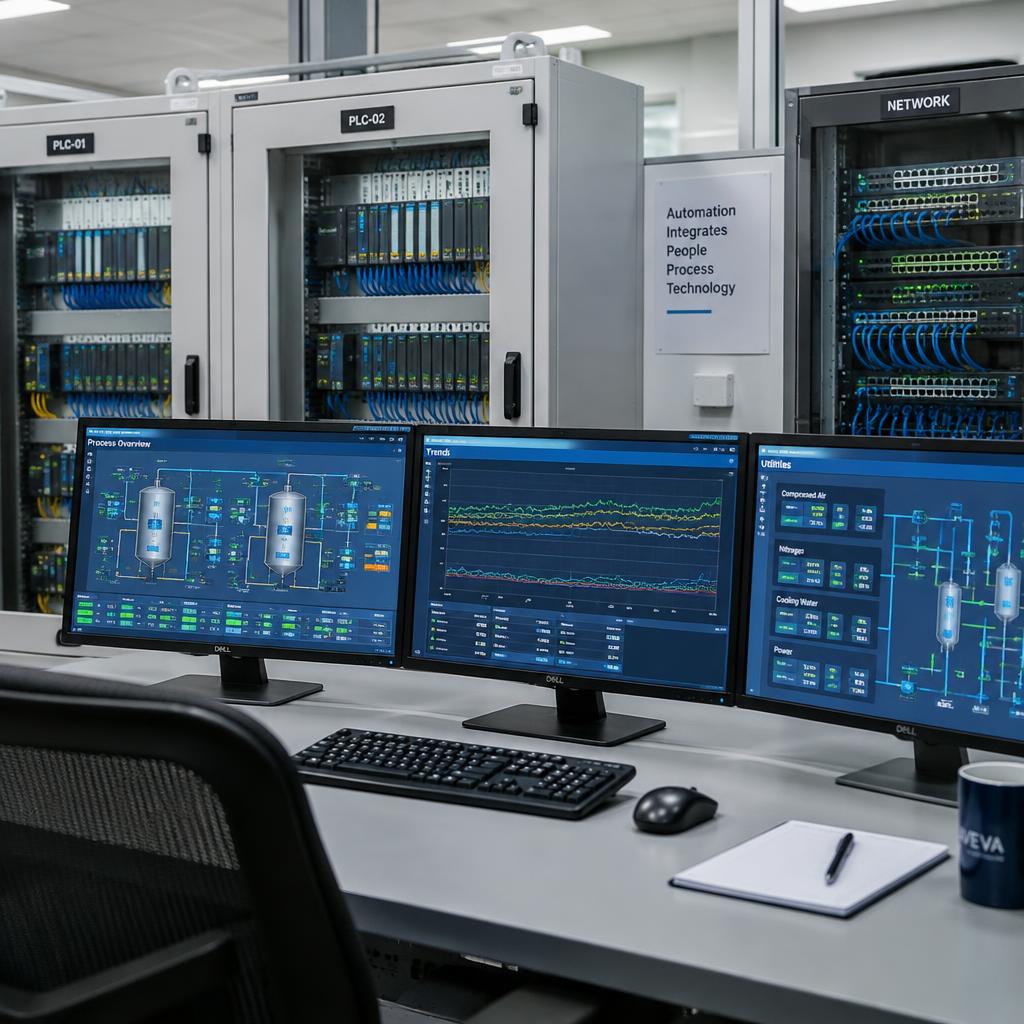
PLC, HMI and SCADA are three words that come up in almost every automation conversation, and they describe three different layers of the same system: the controller that runs the machine, the screen the operator touches, and the software that watches the whole plant. Understanding how they fit together makes automation projects far easier to discuss and scope.
The PLC: The Controller
A programmable logic controller (PLC) is an industrial computer that reads inputs from sensors and switches and writes outputs to motors, valves and alarms according to a control program. It runs continuously and deterministically, which means the same inputs always produce the same outputs within a predictable time. That reliability is why PLCs dominate machine and process control.
The HMI: The Local Face of the Machine
A human-machine interface (HMI) is the screen at or near the machine. It lets an operator start and stop equipment, adjust setpoints, acknowledge alarms and see the immediate status of the process. A good HMI shows only what the operator at that machine needs, arranged clearly enough to act on quickly.
SCADA: The Plant-Wide View
Supervisory control and data acquisition (SCADA) sits above individual machines. It collects data from many PLCs across a site, stores it historically, and presents a plant-wide picture: trends, alarms, reports and overall performance. SCADA is where managers and engineers answer questions such as how production tracked over the shift, or which areas repeatedly trigger alarms.
How They Work Together
On a typical plant the layers cooperate like this:
- The PLC reads instruments and controls equipment in real time
- The HMI gives the local operator direct control and feedback
- The PLCs report their data upward to the SCADA system over the plant network
- SCADA stores and presents the data, and may pass setpoints or commands back down under supervision
A useful way to remember it: the PLC acts, the HMI informs, and SCADA supervises. Each layer can be designed independently, but they depend on each other for a complete, usable system.
Why the Distinction Matters
Knowing which layer a problem belongs to saves time. A machine that misbehaves points to the PLC program or field devices; a screen that shows stale values points to communications; a report that does not match reality points to SCADA configuration. Clear separation also makes scoping easier, since each layer has its own hardware, software and engineering effort.
In Summary
PLCs, HMIs and SCADA are complementary layers, not competing options. If you are planning an automation project and want advice on the right architecture for your plant, our industrial automation team is ready to help.
Related services
Related articles
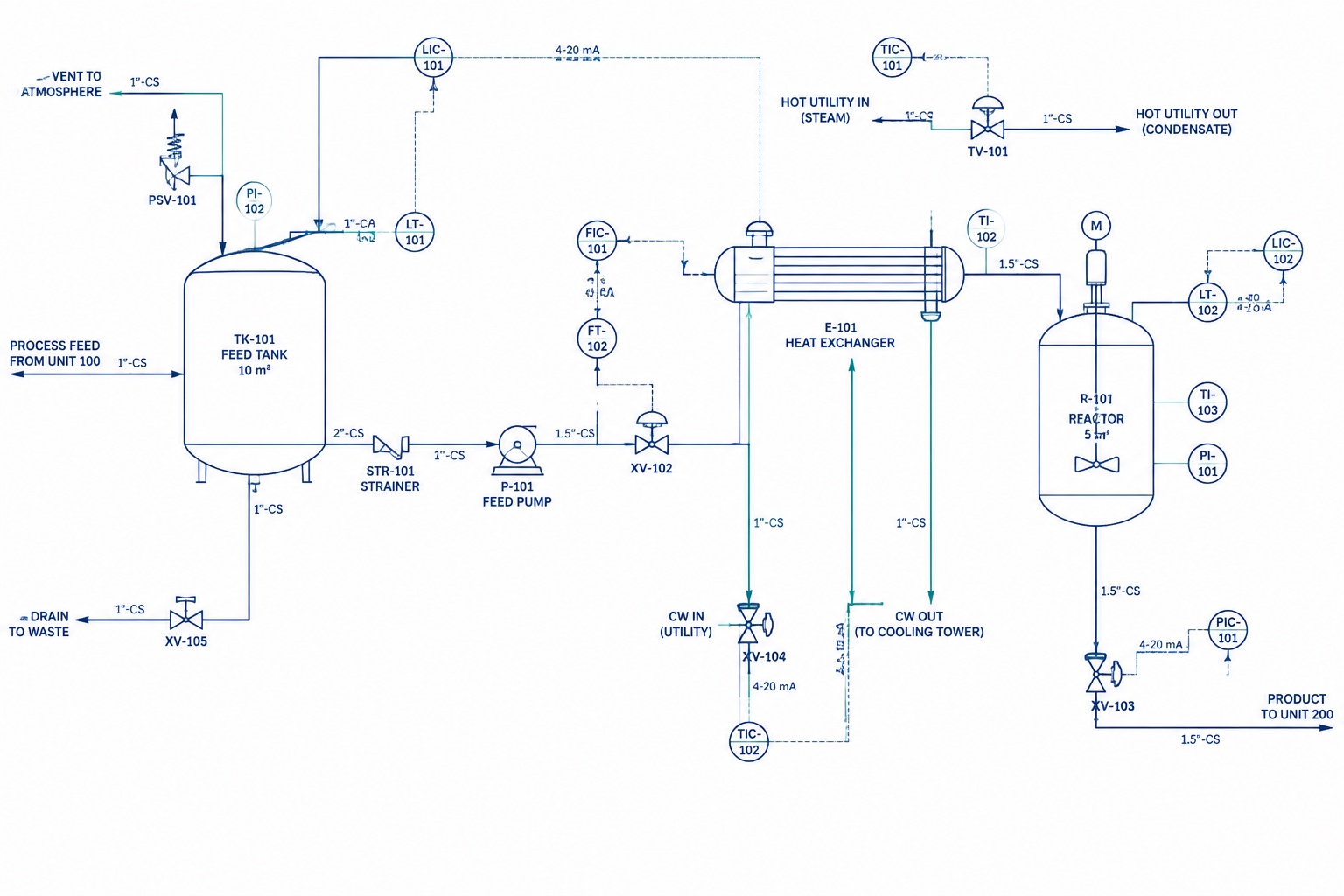
What Is a Piping and Instrumentation Diagram, and How Is It Used?
A piping and instrumentation diagram maps every pipe, valve and instrument in a process system. Learn how to read one and where it is used.
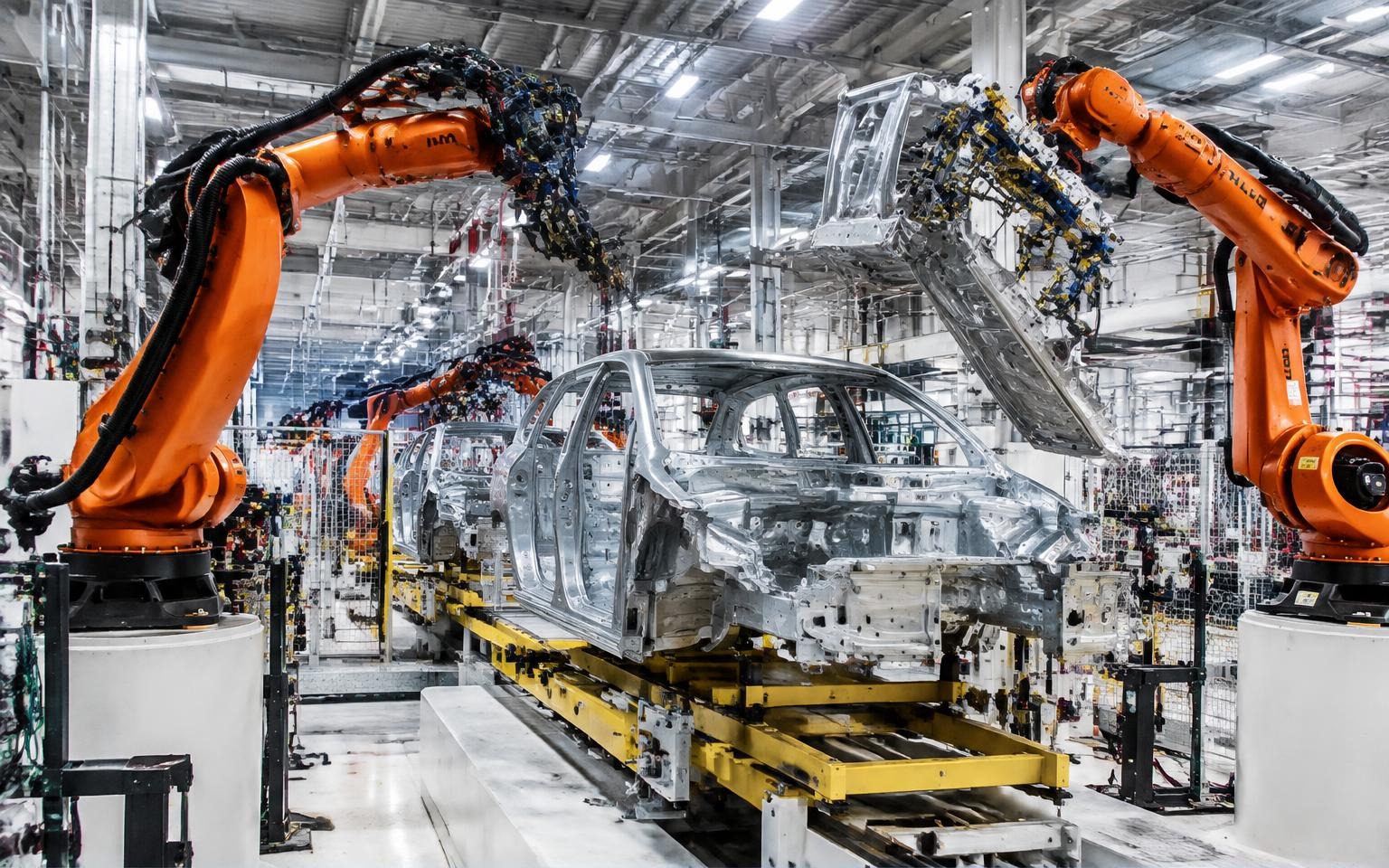
How Do Industrial Automation Systems Improve Process Control?
Automated control keeps processes consistent, efficient and safe. Learn how automation systems improve process control in practice.