
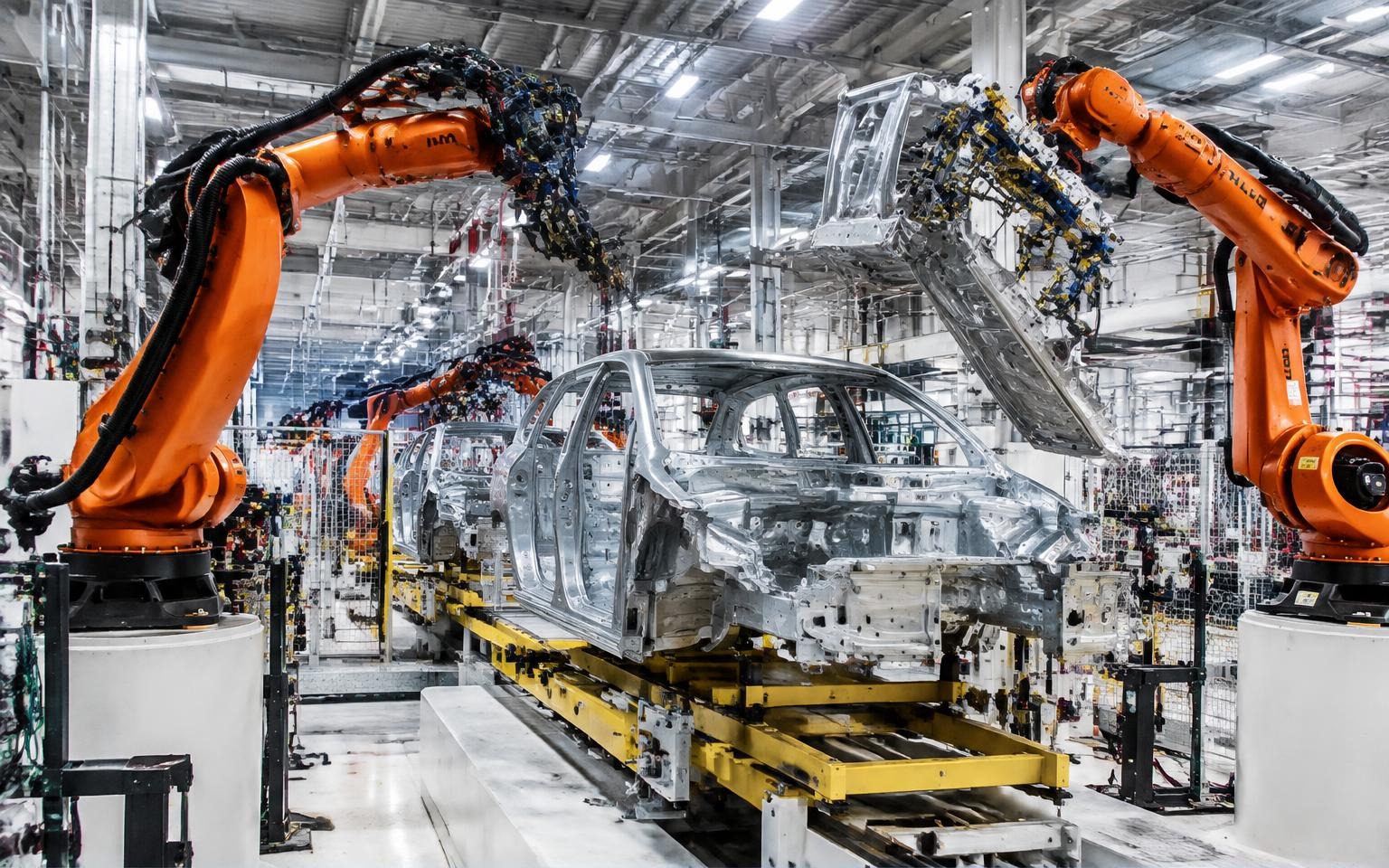
Industrial automation improves process control by replacing manual monitoring and adjustment with continuous measurement, automatic decisions and repeatable action. The result is a process that holds its targets more tightly, responds faster to disturbances and records what actually happened. Here is how those improvements arise in practice.
Consistency Through Closed-Loop Control
A human operator checks a gauge and adjusts a valve every so often. A control loop does this continuously: the transmitter measures the process, the controller compares it with the setpoint, and the actuator corrects any error within seconds, thousands of times a day. Processes stay within tighter bands, which reduces waste, rework and off-specification product.
Faster and Safer Response to Disturbances
Automation reacts at machine speed. A rising pressure, a stalled conveyor or a lost flow triggers a programmed response long before an operator could walk to the panel. Protection logic can stop equipment, isolate flows or trip systems in a defined sequence, which is precisely what safety-focused process design requires.
Sequencing That Never Gets Tired
Many processes are built from repeatable sequences: start a pump, wait for level, open a valve, begin dosing. Automated sequencing performs these steps in exactly the same order with the same interlocks every time. This removes variation between shifts and prevents the skipped or improvised steps that manual operation invites.
Visibility and Data
Automated systems record what the process is doing. Trends reveal slowly drifting instruments, repeating alarm patterns and efficiency losses long before they become failures. Alarms focus attention where it is needed, and historical data supports investigations, reporting and continuous improvement.
Where the Gains Come From
- Tighter control of temperatures, pressures, flows and levels
- Fewer operator errors during routine and abnormal conditions
- Earlier detection of equipment problems through trends and alarms
- Reliable records for quality, compliance and energy management
- Consistent behaviour across shifts and sites
Automation Depends on Good Basics
These benefits only appear when the foundations are sound: accurate instruments, correctly sized control valves, sensible loop tuning and a clear control philosophy. Automation amplifies the quality of the underlying design, which is why engineering design and instrumentation come before programming in any well-run project.
In Summary
Automation improves process control by making measurement, decisions and action continuous, fast and repeatable. If you want to improve control on your plant, our automation team can help you assess the opportunity.
Related services
Related articles
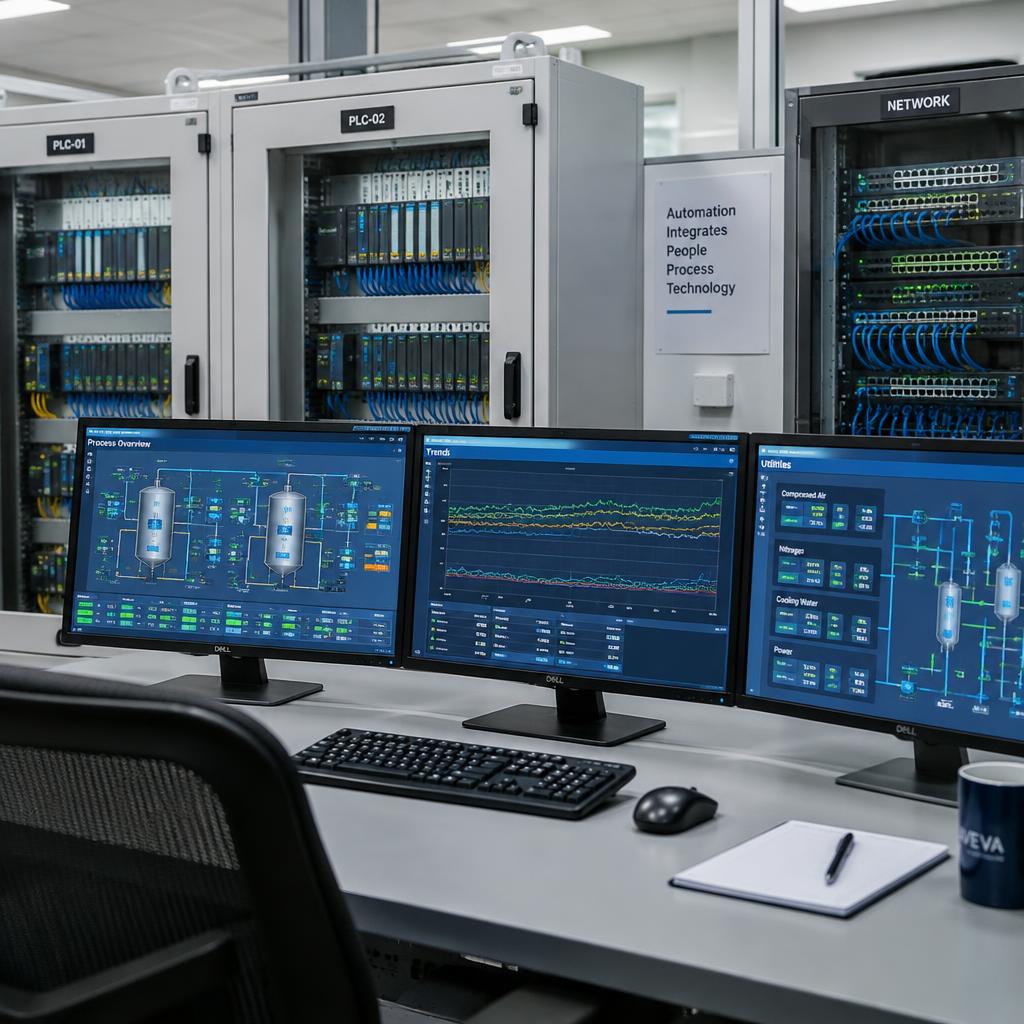
PLC, HMI and SCADA: How They Fit Together
PLCs, HMIs and SCADA each play a distinct role in industrial automation. Learn how the three layers work together on a typical plant.
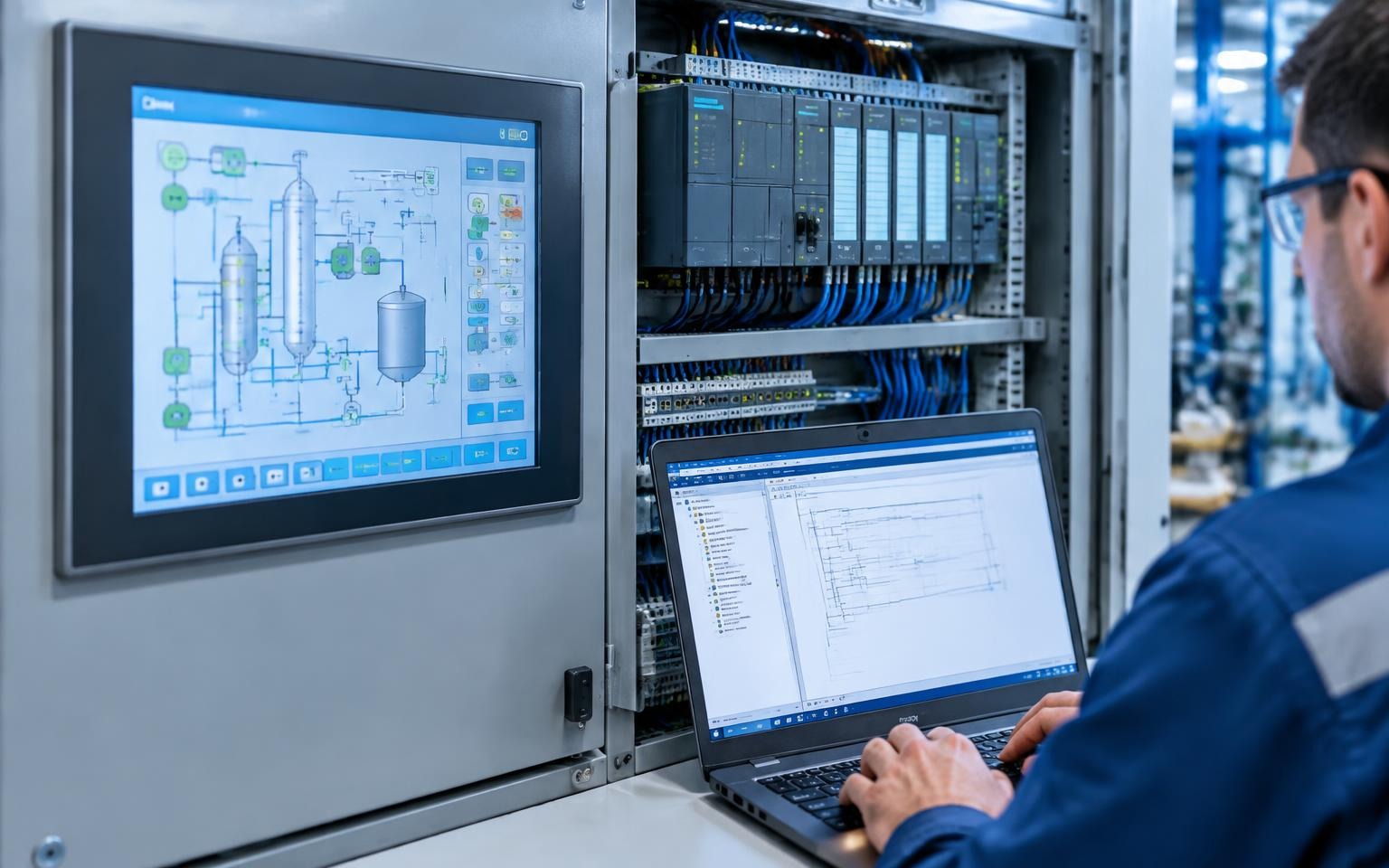
What Is the Difference Between Controls and Instrumentation?
Instrumentation measures a process and controls act on it. Learn where the two disciplines meet and how they differ.