
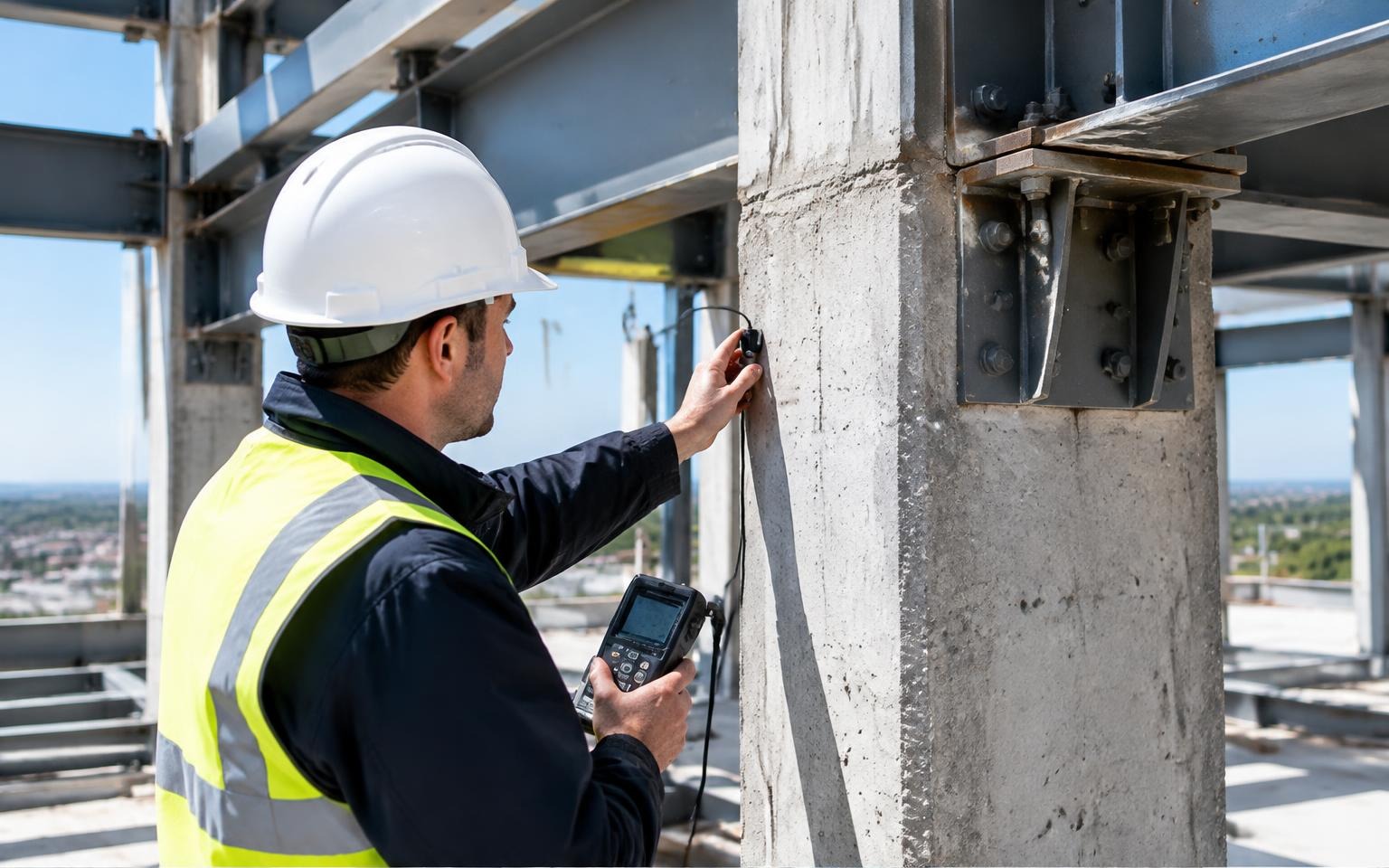
A structural assessment answers a specific question: can this structure carry the loads it will experience, safely and for its intended life? It is needed when a structure shows distress, when its use changes, when documents are missing, or before an investment decision. Knowing what happens during one helps you plan it and act on the findings.
Start With the Question and the Evidence
Every assessment begins by defining what is being checked and why. The existing condition of the structure is then reviewed: original drawings and calculations if available, records of past modifications, maintenance history, and any reports of cracking, movement or water damage. Where documents are missing, the assessment includes reconstructing the key information from measurement and inspection.
The Visual Inspection
The engineer examines the structure systematically: the nature of any cracking and its pattern, deflections, corrosion and section loss, connections and bearings, drainage conditions, and signs of overloading or modification. Photography and marked-up drawings record what was found, and areas of concern are identified for closer examination.
Investigation and Testing Where Needed
Where visual information is not enough, targeted investigation follows. Depending on the structure, this may include measuring member sizes, checking materials, opening up concealed elements or monitoring movement over time. The aim is to gather just enough reliable information to base the assessment on facts rather than assumptions, and each test is chosen for what it will change in the conclusion.
Analysis Against the Loads
The engineer then compares capacity with demand:
- What loads the structure actually experiences now, including any changed use
- What the structure was designed to carry, or what its members can realistically resist
- Whether the applicable structural standards' requirements are met
The analysis distinguishes between issues that are cosmetic, issues that need monitoring and issues that need repair or strengthening. This grading is what turns an inspection into a decision.
The Report and Recommendations
A good assessment report states clearly: what was inspected, what was found, what it means for safety and serviceability, and what to do about it. Recommendations typically separate immediate actions, such as restricting loads or propping, from planned repairs, and identify any further investigation needed. Where repairs are recommended, they should be defined well enough to be quoted and built.
What You Should Consider as the Client
- Define the purpose of the assessment up front, such as a change of use or a specific defect
- Provide every document you have; missing records cost more to reconstruct than to find
- Give safe access where the engineer needs it
- Plan for findings: an assessment may confirm the structure, or it may recommend work
In Summary
A structural assessment combines evidence, inspection, targeted testing and engineering analysis to answer a safety question with confidence. If you need a structure assessed, our structural team can scope the right level of investigation for your question.
Related services
Related articles

What Is Included in Engineering Design and Technical Documentation?
Engineering design deliverables range from concept sketches to full drawing packages. Learn what a typical documentation set includes.

Why Is Preventive Engineering Maintenance Important?
Preventive maintenance finds small faults before they become costly failures. Learn why it matters and how to structure a programme.