
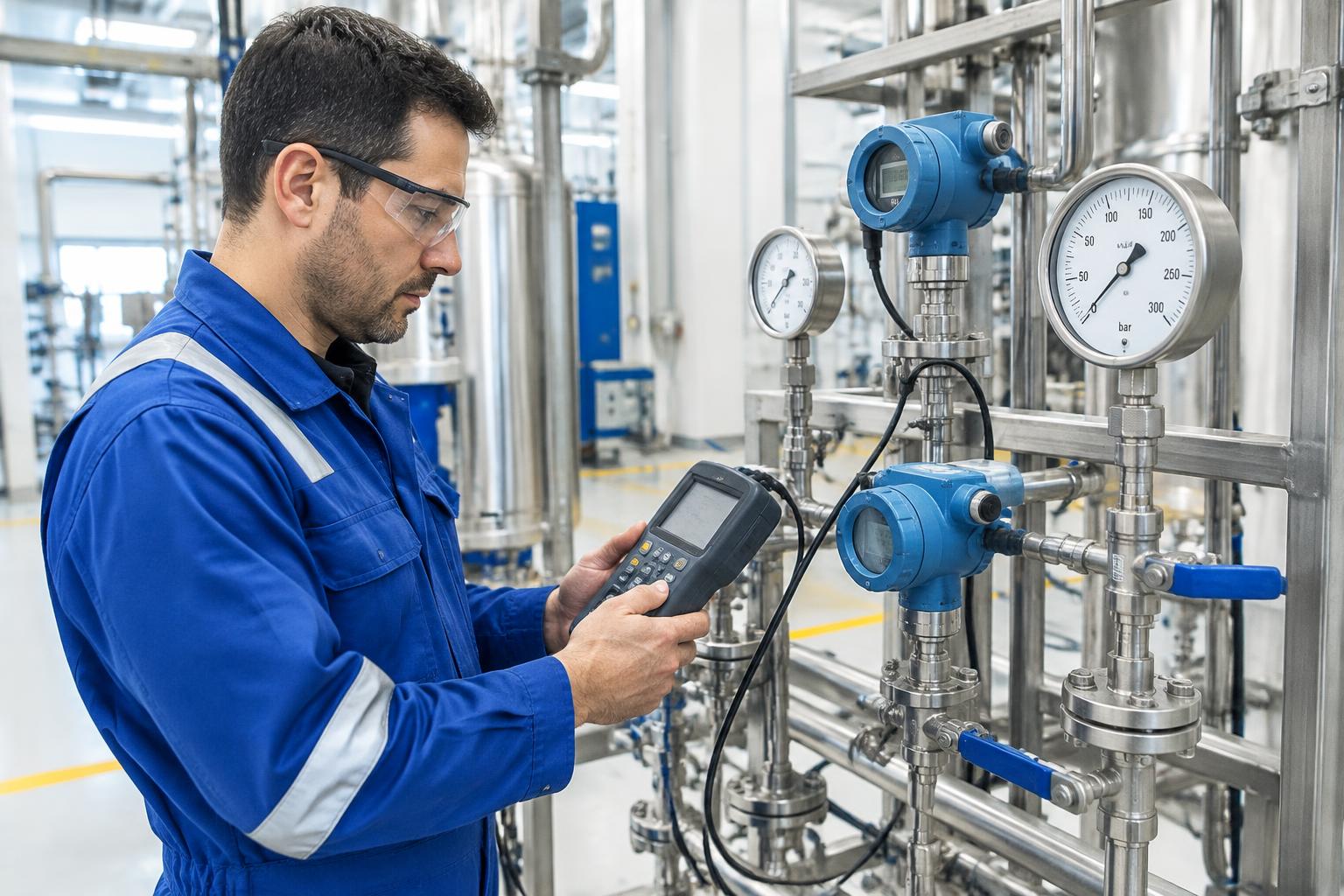
Process decisions are only as good as the measurements behind them. Instrumentation maintenance is the planned work that keeps pressure, temperature, flow and level measurements trustworthy, and a sensible plan costs far less than the production losses and safety incidents that unverified instruments can cause.
Start With an Instrument Register
An effective plan begins with knowing what you have. Build a register of every instrument, recording its tag, location, service, range, criticality and last calibration date. Your P&ID drawings are usually the best starting point for this. The register turns maintenance from a reaction to a schedule, and it highlights the instruments whose failure would affect safety, product quality or environmental compliance.
Prioritise by Criticality
Not every instrument deserves the same attention. Rank instruments by what happens when they fail:
- Safety-critical instruments, such as those protecting against overpressure, come first
- Quality-critical instruments that guard product specifications come next
- Monitoring instruments that inform efficiency and reporting follow
- Indications of convenience can be checked least often
This ranking determines calibration intervals, spares holdings and response priorities, so the budget is spent where it protects the most.
Calibration and Verification
Calibration compares an instrument against a reference of known accuracy and corrects it where needed. How often each instrument is calibrated depends on its role, its stability and the manufacturer's guidance, and those intervals should be reviewed against the drift you actually observe over time. Between calibrations, simple verification, such as comparing a reading against a nearby gauge or against process expectations, catches problems early.
Keep the Records
Record what was done, when, by whom and with what reference equipment. Calibration records support audits, reveal chronic problem instruments and turn disputes about readings into simple checks.
Watch the Whole Loop
The instrument is only part of the measurement. Impulse lines, fittings, cables, seals and the controller configuration all affect the result. A maintenance plan should include visual inspections of installations, checks for corrosion or blockage, and reviews of alarm settings, because a perfectly calibrated transmitter feeding a misconfigured controller still produces wrong decisions.
In Summary
Instrumentation maintenance is about trust in your measurements. A register, a criticality ranking, a calibration schedule and good records form a plan that protects production and safety alike. If you would like support building or running such a plan, our maintenance team can assist.
Related services
Related articles
Why Is Preventive Engineering Maintenance Important?
Preventive maintenance finds small faults before they become costly failures. Learn why it matters and how to structure a programme.
What Is the Difference Between Controls and Instrumentation?
Instrumentation measures a process and controls act on it. Learn where the two disciplines meet and how they differ.